Getting Through Enterprise Security Reviews Without Slowing the Deal
Security reviews kill enterprise deals more often than price. Most of the delay is avoidable with the right preparation.
Why Security Reviews Kill Deals
I've watched enterprise deals sit in "pending security review" for four months while both sides waited for answers that should have taken a week. The vendor kept sending templated questionnaire responses. The InfoSec team kept asking follow-up questions because the answers didn't actually address their concerns. Nobody was being difficult. The communication just wasn't working.
Security reviews slow down because vendors treat them as a compliance checkbox rather than a trust conversation. InfoSec teams don't care about the questionnaire form. They care about whether this vendor is going to create a risk they'll have to explain to their CISO.
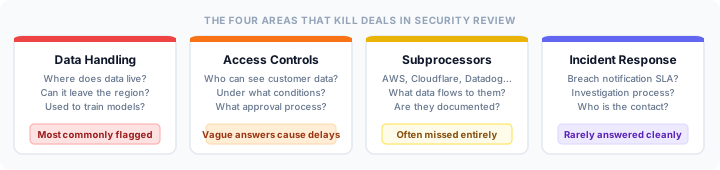
The Questions That Actually Kill Deals
After sitting on both sides of these reviews, there are four areas where vague or incomplete answers reliably create problems:
Data handling and residency. Where does customer data live? Can you guarantee it doesn't leave a specific geographic region? Is it ever used to train models? Enterprise buyers in regulated industries are asking their lawyers these questions. "Data is encrypted at rest and in transit" does not answer them.
Access controls and least privilege. Which of your employees can access customer data, under what circumstances, and with what approval process? Security teams want to know the access model, not just the policy document. "Only authorized personnel" is not an answer.
Subprocessors and third-party exposure. If you use AWS, Cloudflare, Datadog, or any other third party, the enterprise's security team needs to know. They don't expect you to avoid third parties. They expect you to know which ones you use and what data flows to them.
Incident response. How quickly do you notify customers of a breach? What does your investigation and remediation process look like? Who's the contact? This question gets asked and almost nobody has a clean answer ready.
What Good Preparation Looks Like
Before a serious enterprise deal, have written answers to all four of those areas that are specific, accurate, and don't require follow-up to understand. Not marketing copy. Actual technical answers.
Run your own security questionnaire against yourself. The most common frameworks are SIG Lite, VSAQ, and the vendor's custom form. A well-prepared technical consultant can complete most questionnaire questions in advance and flag the ones that need legal or engineering input, so you're not scrambling when the 300-question SIG arrives at 5pm on a Friday.
If you have SOC 2 Type II, lead with it. It answers a significant portion of most security questionnaires by reference and signals that you've been through an independent audit. If you don't have it yet, be honest about your roadmap.
The Pre-Sales Security Call
For larger deals, request a technical security call with the customer's InfoSec team before the formal questionnaire exchange. This call serves two purposes:
First, you learn what they actually care about. Every enterprise has specific concerns shaped by their industry, their past incidents, and their internal risk model. A healthcare company cares about different things than a financial services firm. Understanding that context before you fill out 300 questions saves everyone time.
Second, it builds credibility. A vendor who proactively asks to talk to InfoSec rather than avoiding the conversation reads very differently than one who only engages when pushed.
The security review isn't an obstacle to the deal. It's part of the deal. Treat it that way from the beginning.
What I've Seen Work
The engagements where security reviews go smoothly have a few things in common: the vendor has pre-written, specific answers to the common questions, they engage InfoSec early rather than late in the process, and they don't treat every question as an attack on their business.
The ones that stall have vendors who escalate every security question to legal and respond weeks later with answers that don't address what was asked.
Know your security posture. Document it properly. And don't make the enterprise's InfoSec team do the research that you should have done yourself.